Barnyard Veterinary Service & Supply

  • Home
  • Services
  • Products
  • News & Education
    • Events
  • About
    • Emergency Care
    • Meet Our Staff
    • Employment
  • Resources

Category Archives: Education

Hens laying less?

Posted on October 20, 2015 by Sandra Wahlert DVM Posted in Education .
Backyard Chickens

Backyard Chickens

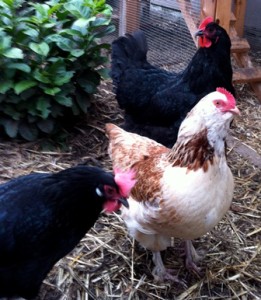
My hens quit laying as many eggs in the fall/winter. Is something wrong with them?

Likely your hens are normal. As the days get shorter the egg production of you hens may drop off considerably. Chickens need about 12 hours in the afternoon and nighttime to produce an egg and its surrounding shell that will be laid the next morning.

As the day length decreases so does the number of eggs that can be produced. You can counteract this natural cycle by artificially increasing the day length. Set a 40 watt bulb on a timer to come on earlier in the morning so the hens get a total of 16 hours of light a day.


Share this:
Share this page via Email Share this page via Stumble Upon Share this page via Digg this Share this page via Facebook Share this page via Twitter
Tags: chickens, eggs, hens, laying .

Backyard Chickens and Oyster Shell

Posted on October 7, 2015 by Sandra Wahlert DVM Posted in Education .
Feeding the chickens, by Walter Frederick Osborne

Feeding the chickens, by Walter Frederick Osborne

Should I feed my backyard chickens oyster shell?

Laying hens that are actively laying eggs should have plenty of calcium provided in their diet. Since an egg is composed of about 40% calcium, hens have a pretty hefty calcium requirement. Quality commercial lay pellets are designed to be calcium rich.

However a hen’s feed intake will often drop in hot weather so she may not get all of the calcium she needs. Oyster shell is 36-41% calcium and can be a good source of supplementation when offered free choice. It can stay in the digestive tract longer than processed feed thus allowing for a slow continuous release of calcium. Oyster shell preparations that are combined with limestone, Vitamin D and other vitamins and minerals can be especially effective.


Share this:
Share this page via Email Share this page via Stumble Upon Share this page via Digg this Share this page via Facebook Share this page via Twitter
Tags: backyard chickens, calcium, chickens, oyster shell .

Lab Work for Animals

Posted on September 2, 2015 by Sandra Wahlert DVM Posted in Education .

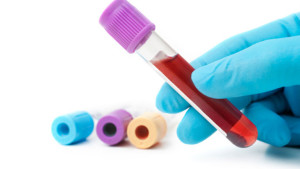
test tube with blood sampleMy doctor orders blood work on me when I go in for a physical. Do they offer the same blood work for pets?

There are many blood tests that are similar in people and animals. Some pet owners shy away from lab work due to the expense, but it can save money in the long run. Getting annual lab work done on your pet can assist your veterinarian in detecting disease early. Even if the results are within the normal limits, your pet may have consistently high or low values that are normal for them. If these values change over time that can be a red flag that something is wrong.

Certain blood tests are recommended before certain surgical procedures to see if there are any abnormalities that might change the way the animal processes anesthesia or if it’s anemic or if it’s blood can clot.

Other tests like glucose curves and thyroid panels need to be run more frequently to monitor the effectiveness of certain medications and their dosages.

Consult with your veterinarian as to the best blood work options and wellness plans for your pet’s needs and risks.


Share this:
Share this page via Email Share this page via Stumble Upon Share this page via Digg this Share this page via Facebook Share this page via Twitter
Tags: blood work, lab, surgery .

Some Choices for Cleansing Wounds

Posted on August 27, 2015 by Sandra Wahlert DVM Posted in Education .

first aid iconWe’ve all done it. It’s seems to be so called common knowledge. If you or your pet has an open wound, pour a bunch of hydrogen peroxide on it and watch it fizz. That great bubbling action is getting the infection out, right?

Well, not exactly. It’s actually damaging the cells. Hydrogen peroxide can be effective at killing bacteria that don’t like oxygen such as those found in abscesses; however, it’s not very effective at killing bacteria on the surface of skin and it can damage cells.

Here are some better choices for cleansing wounds on animals:

  • 0.9% saline solution
  • sterile water (or even just clean or boiled water in a pinch),
  • one of the ready-made gentle wound cleansers on the market such as Vetericyn or Constant Clens.

Ask your veterinarian about what they would recommend you have in your pet’s first aid kit.


Share this:
Share this page via Email Share this page via Stumble Upon Share this page via Digg this Share this page via Facebook Share this page via Twitter
Tags: first aid, hydrogen peroxide, wounds .

Laser Therapy

Posted on July 1, 2015 by Sandra Wahlert DVM Posted in Education .

What is laser therapy and how does it work? 

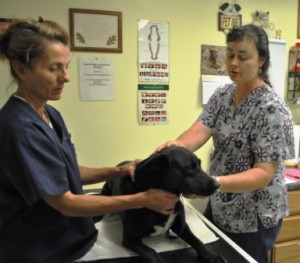
Dr. Sandy examines a dog

An exam is given prior to laser treatments.

Laser therapy is the use of light waves to promote healing .  Light waves come in varying lengths and can be referred to as cold or hot.  Both can stimulate healing, but hot or class IV lasers are more powerful and work with the body to more quickly heal the tissues.  They also penetrate more deeply into the tissue so a broader range of ailments can be treated in a timely fashion.  Lasers, when used correctly, decrease pain and inflammation and help the body heal itself.  They do this by increasing the microcirculation which brings more blood and thus oxygen into the injured area.  Additionally, laser therapy increases the energy or ATP production of the damaged cells.

Uses of Laser therapy in animals. 

Since laser therapy stimulates tissue healing by increasing microcirculation to a wounded or inflamed area and decreases pain, it has numerous applications.  Most procedures involve a short treatment time and almost all animals tolerate the procedure very well . Some treatments involve the use of a massaging ball-like head that focuses the laser beam and allows it to penetrate deeper.  More superficial wounds are treated by running the laser beam about 1/4” off of the surface.  Any animal with musculoskeletal pain, arthritis, wounds/abscesses, fractures, gingivitis/periodontal disease, ear infections, post –surgical incisions or inflammation/injury can benefit from laser therapy. Treatment protocols and price vary with the injury, but overall laser therapy is a very cost effective and non-invasive treatment modality.

Learn more at http://www.litecure.com/companion/for-pet-owners/


Share this:
Share this page via Email Share this page via Stumble Upon Share this page via Digg this Share this page via Facebook Share this page via Twitter
Tags: animals, Barnyard, laser, pet, pets, therapy, veterinary .

What is Cat Scratch Fever?

Posted on May 18, 2015 by Sandra Wahlert DVM Posted in Education .

cat pawsCat scratch fever is a disease that various mammals including dogs, cats and people can get. It is caused by a bacterial species known as Bartonella.  Fleas play a role in the transmission of some of the Bartonella bacterial species.
Humans generally contract cat scratch fever when a cat’s claws or saliva get contaminated with flea feces and then the cat scratches, bites, or licks an open wound on the human.  Symptoms in humans can include fever, headaches, and chronic fatigue.

Antibiotics can aid in the treatment of this disease for both people and animals. Additionally the use of flea control products in pets can help reduce the risk of exposure.


Share this:
Share this page via Email Share this page via Stumble Upon Share this page via Digg this Share this page via Facebook Share this page via Twitter
Tags: cat scratch fever .

Tapeworm

Posted on May 4, 2015 by Sandra Wahlert DVM Posted in Education .

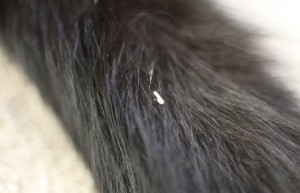
TapeWormYuck! Yuck! Double yuck! I saw a small white worm about the size of a grain of rice crawling around the underneath side of my dog’s tail. Worse yet he sleeps on my bed. What do I do?

It sounds like you’ve had the opportunity to view a tapeworm segment or proglottid (tapeworm egg sack).  Dogs and cats both can pick up various species of tapeworms from eating raw meat such as venison, rabbits, mice or hamburger.  They can also get them from ingesting fleas off of their bodies while grooming. Most pets are asymptomatic but diarrhea, poor hair coat, weight loss, and anal irritation can be seen.

Tapeworms can be transmitted to people with children especially being at risk.  Praziquantel is the drug of choice to treat tapeworms and can be purchased through most veterinary offices. Treatment will need to be repeated as often as the pet re-infects itself.


Share this:
Share this page via Email Share this page via Stumble Upon Share this page via Digg this Share this page via Facebook Share this page via Twitter

Do they have insurance for pets?

Posted on April 13, 2015 by Sandra Wahlert DVM Posted in Education .
Dr. Sandy examines a dog

Some plans include preventative care services.

Yes, but don’t wait until your pet has a medical condition to look into purchasing it.  Pet medical insurance companies often exclude pre-existing conditions so the best time to purchase insurance for your pet is when he/she is young.

Most plans have a waiting period before coverage takes effect. Some plans include preventative care services such as vaccinations and annual exams, while others charge an additional fee.

Monthly premiums often range between $15.00-$85.00+ a month depending on the coverage, deductible, and copay. Keep in mind that the owner generally has to pay for all charges at the veterinarian’s office up front and then the insurance company reimburses them.

Go to www.consumersadvocate.org/pet-insurance/best-pet-insurance.com for a listing of the top 10 pet health insurance companies and links to each site.


Share this:
Share this page via Email Share this page via Stumble Upon Share this page via Digg this Share this page via Facebook Share this page via Twitter

Treats and Pet Teeth

Posted on February 11, 2015 by Sandra Wahlert DVM Posted in Education .
February is National Pet Dental Month

February is National Pet Dental Month

What dental treats actually work for decreasing plaque and tartar in my pet’s mouth?

If you are trying to improve the quality of your pet’s mouth, skip the bone shaped box of treats.  Studies have been done to show that both rawhide chews and Greenies can reduce plaque and tartar on your dog’s teeth.  There are some treats specifically designed for cats as well, if they are so inclined to oblige you with a trial.  For a list of pet dental products that have been shown to reduce plaque and tartar visit www.vohc.org and look for their stamp of approval on dental home care products. Additionally, visit your local veterinary office for more tips on oral care in dogs and cats.

Share this:
Share this page via Email Share this page via Stumble Upon Share this page via Digg this Share this page via Facebook Share this page via Twitter

Pet Foods That Help Pet Teeth

Posted on February 4, 2015 by Sandra Wahlert DVM Posted in Education .
February is National Pet Dental Month

February is National Pet Dental Month

Do they make pet foods designed to help keep my dog’s and cat’s teeth clean?

Yes! Research shows that 70% of cats and 80% of dogs will have some form of dental disease by the age of two years.  Sticky plaque build up is the number one cause of periodontal (dental) disease.  Hill’s Science Diet T/D and Purina ProPlan’s DH are both prescription dental foods that are designed to reduce plaque and tartar when fed as the sole diet.  The larger unique kibble size is designed to scrape the tooth as it is chewed. Additionally the kibble breaks down more slowly in the pet’s mouth allowing for even more chewing and scraping action. These foods are formulated to be fed to most adult or senior pets, but consult with your  veterinarian to make sure this is a good choice for your particular pet.


Share this:
Share this page via Email Share this page via Stumble Upon Share this page via Digg this Share this page via Facebook Share this page via Twitter
« Previous Page
Next Page »

Welcome

logo

Recent News

  • Do pet cats have special psychological needs?

Connect on Facebook

Connect on Facebook
  • Home
  • Services
  • Products
  • News & Education
    • Events
  • About
    • Emergency Care
    • Meet Our Staff
    • Employment
  • Resources
Barnyard Veterinary Service and Supply logo

Caring for God's critters, large and small.

1705 University Avenue
Hot Springs, SD 57747

(605)745-6888

CyberChimps WordPress Themes

© Barnyard Veterinary Service & Supply